AS9100 program alignment
Supports aerospace quality conversations where heat identity, process control and documentation chain must be visible before release.

Metallurgy
Use this page as a technical entry point for alloy finder logic, property comparison, metallurgical lab review and certification planning. The structure is compact, with content focused on material engineering, property evidence and release documentation.
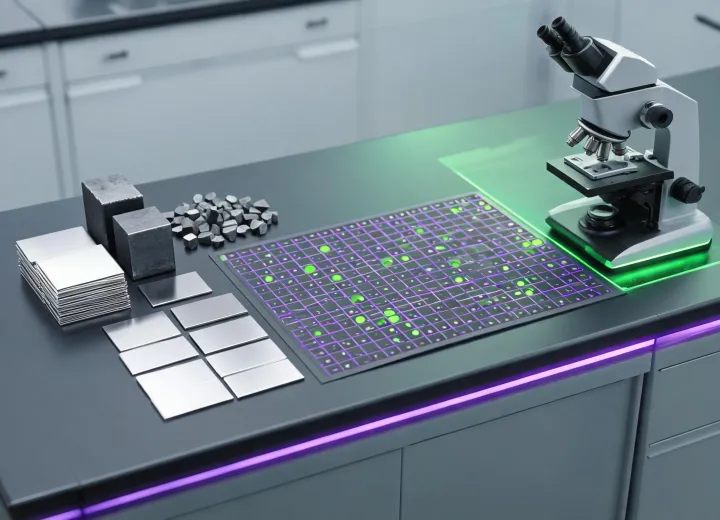
Property Matrix
| Engineering signal | Likely material route | Review method |
|---|---|---|
| Edge stability with corrosion exposure | High cleanliness stainless strip or martensitic stainless family. | Compare hardness response, corrosion behavior, finish condition and lot documentation. |
| Hot wear or furnace environment | Tungsten, molybdenum, refractory alloy or nickel-based material depending on load. | Review service temperature, oxidation risk, density constraints and joining method. |
| Tooling under repeated forming load | Tool steel or specialty alloy steel with controlled heat treatment window. | Map toughness, wear resistance, polishability, dimensional movement and machinability. |
| Certified production release | Any approved family with heat identity, certificate package and controlled substitution logic. | Build a release checklist that quality, engineering and purchasing can read the same way. |
The metallurgy page reframes the original schema table as a material engineering matrix. A buyer may arrive with a known trade name, a legacy drawing note or only a performance problem. Sandvik uses the matrix to separate the mechanism from the habit. If the issue is abrasive wear, the discussion moves toward hardness response and carbide structure. If the issue is high temperature, the discussion moves toward strength retention, oxidation and thermal cycling. If the issue is corrosion in a clean environment, stainless family and finish become more important than a simple strength number. This structure helps the visitor see alloy finder work as a disciplined screening process rather than a search box with a product list behind it.
Provide the grade in use, the property target, the service environment and the certification requirement. Sandvik can help organize the next material path.
Request Metallurgy Review